
Meet Lidiya Becker and Build It Labs
On this episode of Startup Success, we’re joined by Lidiya Becker, founder and principal of Build It Labs. Lidiya has spent more than 15 years as an operator, from large, mature companies generating billions in profit to zero-to-one environments like Happiest Baby SNOO, where she helped build and scale operations from pre-revenue.
That range gives her a rare vantage point. She has seen what “good” looks like at scale and what it actually takes to get there from the messy early days.
With Build It Labs, Lidiya works with rapidly growing, product-based startups, typically those manufacturing and distributing physical goods. She steps in when the stakes are high: new market entries, first major product launches, or scaling operations to meet growing demand without compromising quality or customer experience.
In this conversation, she focuses on the team side of operations, unpacking what it really takes to build scalable teams and processes, while her broader work at Build It Labs covers many other operational challenges.
The Three Concentric Circles: Purpose, People, Process
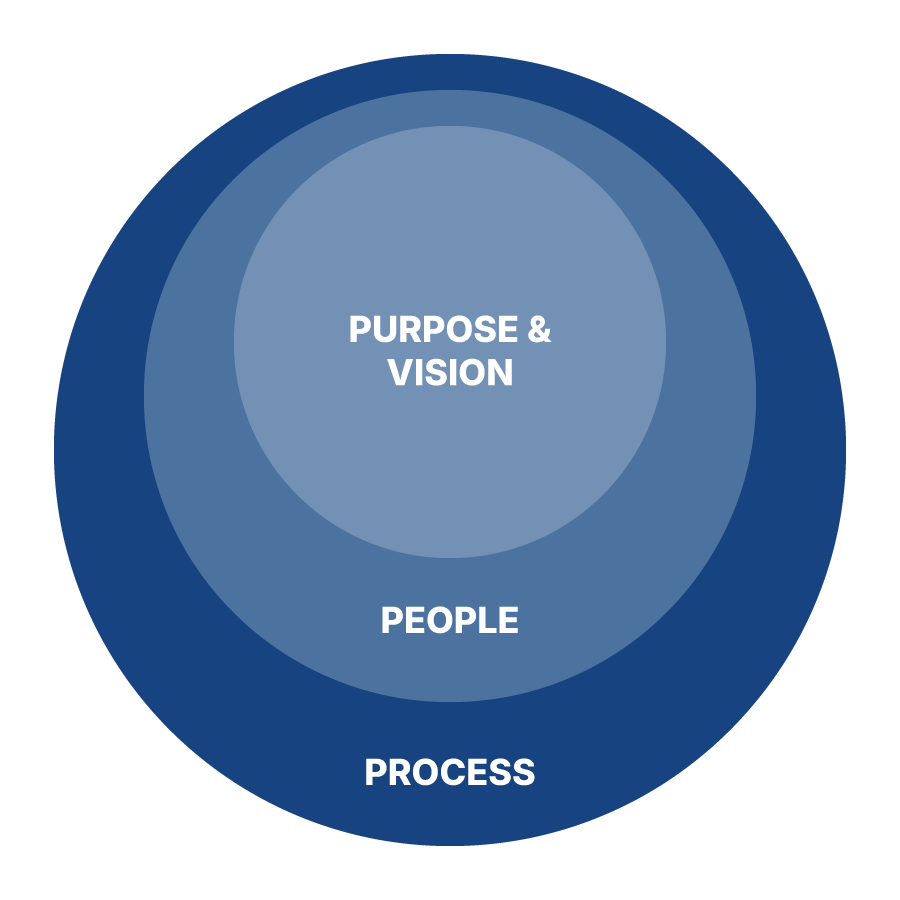 When Lidiya thinks about a high-performing, scalable team, she imagines three concentric circles:
- Purpose & Vision (Center)
At the core: Why your company exists and how you add value to the world. This is the anchor for every decision. - People (Middle Ring)
Who is on your team? Do they have the skills, drive, and alignment with your purpose and vision? Are they genuinely excited to own outcomes, not just tasks? - Process (Outer Ring)
How you work together to move from point A to point B. How decisions get made. How you ensure consistent outcomes for customers as you grow.
In her words, a company is essentially “a bunch of people making a lot of decisions day in and day out.” The goal is for those decisions to be aligned with your purpose and vision so everyone is rowing in the same direction.
Here’s a key nuance many founders miss:
If you have great people, you need lighter processes and less infrastructure. With the right team, you can move faster while still staying aligned.
When you tolerate misaligned or low-performing team members, you compensate with heavy process: more approvals, more checklists, more bottlenecks. That slows the company down exactly when you need speed the most, and it quietly drives away your best people, who get tired of working around weak links and wasting energy on bureaucracy instead of impact.
Hiring Well Across Three Phases of Scale
Hiring well is one of the most leveraged decisions a founder can make. It sounds obvious, but as Lidiya points out, it’s hard to do consistently, especially while the company is evolving.
She breaks the journey from 0 to roughly $50M in revenue into three informal phases, each with different hiring needs.
Phase 1: Zero to Roughly $15M – All-Around Athletes
In the early stage, you’re a small team. Everyone is doing strategy and execution. There are very few rules, and everything is still being figured out.
In this phase, Lidiya recommends hiring “all-around athletes”:
- Generalists who can wear many hats
- Smart, results-driven people with a bias to action
- Mini-entrepreneurs who have shown they can take ownership and drive things to the finish line
It’s tempting to hire someone with 15 years of experience at a big, well-known company that looks like your “future state.” But if they weren’t there when the company was scrappy and writing POs themselves, they may struggle in the early stage.
In Phase 1, hunger and ownership often matter more than a polished resume.
Phase 2: Foundation for Scaling
As you move beyond survival mode and start to see real traction and product-market fit, your hiring priorities shift. You still want people with a bias to action, but now you can get more specific about:
- Which functions need to be upleveled
- What prior experiences are truly relevant
- Which capabilities will build the foundation for repeatable, scalable operations
You start hiring people who can up-level the systems and teams, not just “figure it out” in the moment.
Phase 3: Leadership Layer and “Generals”
Once you’re past $20M+ revenue and roughly 50–100 people, a distinct leadership layer emerges. At this point, your functional leads become the generals of your organization.
They’re not just executing; they are:
- Shaping and maintaining culture
- Translating strategy into plans across bigger teams
- Owning key outcomes in large, sometimes global, markets
Here, Lidiya stresses the importance of A-players. Leadership hires in Phase 3 have outsized impact, because top leadership no longer has a direct line of sight into every detail.
Two Common Hiring Pitfalls That Slow You Down
Lidiya sees two recurring problems in how startups hire. Both show up across stages and both are fixable.
Pitfall 1: Not Defining Success Up Front
Too many teams start hiring with a title and a vague sense of “we’ll know it when we see it.”
Lidiya’s approach starts with a much sharper question:
A year from now, what would a very successful hire have achieved in this role?
From there, you define:
- The outcomes this person should own
- How they work and collaborate
- The specific competencies and attributes needed to deliver those outcomes
This alignment exercise shouldn’t happen in one person’s head. She recommends getting key stakeholders in a room for 30–45 minutes to hash it out. That avoids the all-too-common scenario where:
- The founder wants one thing
- Functional leads want something slightly different
- Everyone is interviewing to a different mental picture
Without clarity on success, interview processes drag on, candidates feel “almost right,” and no one can articulate why they don’t quite land.
Pitfall 2: “Vibe Check” Interviewing
The second pitfall is running interviews as casual conversations and making decisions based mostly on vibes.
Many founders have seen some version of this: dinner interviews where you feel like you’re being judged on what you order, or meetings filled with small talk and personality assessments instead of real exploration of what the person has actually done.
This is the opposite of a rigorous hiring process.
A Structured, Evidence-Based Approach to Hiring
Instead of informal vibe checks, Lidiya recommends a structured, attribute-based interview process.
The basic idea:
- Define success for the role.
- Identify the attributes and capabilities required (for early-stage startups, things like scrappiness, flexibility, ownership, results orientation often top the list).
- Design behavioral questions that elicit real examples showing those attributes.
Examples of questions she uses:
- “Tell me about a time you had to be really creative to get a job done.”
- “Give me an example of a project where you had to overcome significant obstacles to get to the finish line.”
- “Describe a situation where you had to persuade a boss or peers to do something a different way. What happened?”
These open-ended questions prompt candidates to share specific stories. Those stories give you data on how they think, how they act under pressure, how they influence others.
Two elements make this approach powerful:
- Consistency across candidates
Ask the same core questions to all candidates for a role so you’re not comparing apples to oranges. When you’ve asked 50–100 people the same “Tell me about something you’re proud of” question and you always dig a few layers deeper, you develop a very sharp sense for strong versus weak answers. - Follow-up questions that reveal actual contribution
Good candidates can present a polished story about “we achieved X.” Great interviewers dig in:- “What exactly were you hired to do?”
- “What was your role in the project?”
- “What decisions did you make?”
- “What were the low points or failures in that role?”
- “Why did you ultimately leave?”
You’re not hiring their former company. You’re hiring this person. Follow-ups are where you separate passengers from drivers.
Lidiya also notes that intuition still matters. The data shows that gut feel has value, but only when it’s paired with structured evidence. The sweet spot is the combination of:
- Clear, comparable data from structured questions, and
- Your read on whether this person will thrive in your specific context.
The Round Table: Turning Signals into a Decision
Even with good interviews, many teams stumble at the finish line by running a loose, unstructured debrief. Lidiya is a big believer in a disciplined round table at the end of the process.
Her recommended flow:
- Get everyone in the room
Include all interviewers and a facilitator (often the hiring manager or HR). - Start with a simple Yes/No – junior to senior
Each person shares “Yes” or “No”, in order from the least senior person to the most senior, with no explanation at first. This prevents the founder or senior leader from unintentionally biasing the entire room. - Then share rationale grounded in data
After the initial pass, each interviewer explains why they voted yes or no, referencing specific answers, examples, and behaviors from the interview, not just feelings. - Use it as a learning loop
This process surfaces gaps:- Did someone fail to dig in on a critical area?
- Are multiple interviewers asking the same questions instead of covering different attributes?
Over time, the round table helps everyone become better interviewers and improves your overall hiring system.
And then comes Lidiya’s rule for the final call:
“I always say, if it’s not a Hell Yes, then it’s a NO.”
If the room lands on “They’d probably be fine” or “We’ve been interviewing a long time and they’re good enough,” that’s usually a sign you’re about to make a compromise hire. In her experience, those are the people you often have to let go later.
Someone in the room should feel genuine conviction that this candidate will add real value and raise the bar. That’s where structured data and intuition meet.
Building Teams and Processes that Scale Together
The takeaway for founders from Lidiya’s experience is clear. You don’t scale by piling on more process, you scale by:
- Clarifying your purpose and vision
- Hiring the right people for the stage you’re in
- Using intentional, structured hiring practices instead of hoping you’ll “know it when you see it”
- Letting process grow just enough to support those people, not constrain them
High-performing teams at every stage share a few common traits: ownership, bias to action, and alignment with the company’s purpose. When you hire for those traits and evaluate candidates with rigor, you earn the right to keep your processes lighter and your organization faster.
Learn More About Build It Labs
Huge thanks to Lidiya Becker for joining Startup Success and sharing such practical, real-world guidance for founders. To learn more or explore working together:
- Visit BuildItLabs.com
- Connect with Lidiya on LinkedIn
If your startup is in growth mode, producing and distributing physical products, and facing high-stakes scaling decisions, Build It Labs specializes in helping teams like yours build the operational backbone and hiring practices needed to grow with confidence.
- Strong operations start with three concentric circles: Purpose, People, and Process.
- If you hire the right people, you can keep processes lighter and stay agile as you scale.
- Different stages of growth require different types of hires, from “all-around athletes” to functional generals.
- Most hiring mistakes come from fuzzy success criteria and unstructured, vibe-based interviews.
- A structured interview loop and round table debrief (“If it’s not a Hell Yes, then it’s a NO”) dramatically improves hiring outcomes.
Intro 00:01
Welcome to Startup Success, the podcast for startup founders and investors. Here, you’ll find stories of success from others in the trenches as they work to scale some of the fastest growing startups in the world, stories that will help you in your own journey. Startup Success starts now.
Kate 00:17
Welcome to Startup Success. Today, we have a very special guest. We have Lidiya Becker in studio, who is the founder and principal of Build It Labs, which caught my eye because they provide operational consulting for startups. Welcome Lidiya.
Lidiya 00:35
Thank you so much. It’s fun being here.
Kate 00:38
Yeah, I’m excited we’re doing this. If you could walk us through your background, and then we could get into a little bit more detail about what Build It Labs does. But I know from all the startups we work with, there’s a lot of needs for some operational help as you scale. So I’m excited about this conversation.
Lidiya 01:00
Me too. Well, I’ve been an operator for over 15 years, and I’ve had the luxury of working at very big like mature companies, made a multi billion dollar profit, and also building something from scratch, pre-revenue, which is a company called Happiest Baby SNOO, which I’m sure we’ll get into. And having kind of both views of the spectrum of what success looks like in a mature state, and then how do you build and scale something quite rapidly, informed a lot of what I built at Build It Labs and what I do currently, which is support rapidly growing companies as they scale.
Kate 01:38
Oh, great. Okay, so you help them primarily with the operational pieces?
Lidiya 01:44
Yes, operations and strategy. I really engage when companies really have these high stakes projects where they can’t afford to drop the ball. So things like launching into a new market, launching a product for the first time, scaling operations. So you have some traction in the market. You have some early maybe product market fit. But how do you repeat that at a high quality level, meeting your customers needs day in and day out, and basically at scale.
Kate 02:19
Right? You’re spot on. I mean, the startups I’ve worked with, that’s where the challenge happens. You know, when you need to scale your operations, and it can be really difficult. When you caught my eye online, you had an image that you use to describe the three components of operations. If you could, like, we don’t have a visual here that we can show the audience, but the three components of operations. And then I want to dig into one that I think founders grapple a lot with.
Lidiya 02:54
Yeah. So when I think of like a high-performing team that ultimately can scale and can deliver, I think of three concentric circles. And at the core, and like, the very center of the circle is Purpose and Vision. Why are you doing what you’re doing? How are you adding value into the world? And like, what’s your vision for the company? That’s kind of like the core, right? And then the next layer is People. This one is critical. Who’s on your team? Do you have the right people in terms of skill set, alignment with your purpose and vision and their drive? And then the final layer is Process. So how do you work together as a team to get from point A to point B? What is a company, but a bunch of people making a lot of decisions day in and day out, and you want those decisions to be aligned – aligned with your vision, aligned with your purpose. You want everybody to be rowing in the same direction. And it turns out, it’s like a lot easier to do this if you have the right people on board in the first place. If you have great people, the right people, you need lighter processes and less infrastructure that can slow you down and enable you to move faster.
Kate 04:12
I love how you explain that, because we hear this on the show over and over again. The founders come on, they have the mission, the product, the problem that they’re going to solve, they’re all excited about it, and where things always start to fall down is the people. And in my own experience, it’s when you have, like, the low performers, or the people on the team, like you said, that aren’t moving in the right direction. That’s when you need all these crazy processes and procedures. But if you’re all like firing together, you explain it perfectly, you need less. So I really want to hone in on the people part, if that’s okay with you, because we hear that over and over again from successful founders, is that they got that right. Why? If. You could just delve into a little bit more about the people you need as a startup scales. I think that would help everyone listening.
Lidiya 05:10
Yeah, absolutely. I mean, I think hiring well is one of the most impactful things that you can do, and it seems so obvious and simple, yet it’s hard to get it right. So when I think of a rapidly scaling company, I think roughly, like, if we’re going from zero to 50 million in revenue, I think of things in roughly three phases. So in phase one you’re like maybe zero to 15 million in revenue, that’s very rough. And you’re really a small team. You’re all hands on. You’re all, like, leading, doing the strategy, and, you know, executing, right? So in this phase, I really focus on hiring this, like, all around athlete. This person is going to wear many hats, be able to frequently pivot. These are, like, smart people results-driven that can take a lot of ownership. I think, like a good analogy for this is like a mini-entrepreneur, you know, somebody who has some evidence in some way of taking ownership and driving things to the finish line. Because there’s just not going to be a lot of rules in the beginning, and people are going to have to figure it out and be smart about it. And somebody with a bias for action. And so that’s kind of your phase one. And then hopefully these people, and often they do, in my experience, grow with the company, and then kind of find their place as the company starts to mature. Once you’re in kind of phase two and you’re maybe getting some traction, right? You have some product market fit, and you’re starting to really scale, you’ll be able to get more specific about what skills and experiences and competencies you need given your business objectives. So maybe no longer these like generalists so much, but people would have some relevant experiences so they can up-level the organization. So I think of this as like phase two, this foundation for scaling. And then once you’re kind of more mature in phase three, you’re scaling, maybe post 20 million’ish revenue, this leadership layer emerges. That happened for us at Happiest Baby, maybe post 50 to 100 people, like, once we started growing to that size. And here you’re really it’s so critical to hire your A players, because these are your generals. Now, there’s a possibility, whereas in like phase one, you’re so small, leadership has their fingers on the pulse of everything that’s happening. Phase three, once you’re starting to really scale, enter in large markets, you’re now having these generals that are maintaining and building on the culture that you want to create.
Kate 08:00
That is so helpful. I really liked how you tied it to startup stage too, because I think that’s helpful. I mean, I think of just like me for marketing. You know, so many times when you’re brought in the early stages of startup, you do everything. You have to wear all the marketing hats, and then you grow and you start hiring someone to just do email marketing, someone to do all the digital, online, right? And so you start to fill it out. And then, like you said, you get to the next stage, and then they start to fill it out even more with like the generals, as you described it, who can do even more in those areas. I think that founders sometimes get too specific in those early stages when they need someone that’s more like an entrepreneur who doesn’t need all the processes and procedures. Is that what you see sometimes?
Lidiya 08:55
Yeah, I think early stage it’s tempting to hire that person with 15 years experience. That’s like, worked at that similar company, that scaled. But they weren’t necessarily there, writing POs, like, you know, filling orders or whatever you have to do in the beginning. So those skill sets trump that experience. It’s like, that hunger, and, of course, you need some capability, right? That’s just so critical this bias for action, and this, I’m going to figure out a way to get from point A to point B trump’s like, kind of the resume experience, which I see as a common inclination in the early stage.
Kate 09:38
Yeah, that is so spot on. I was just talking to a successful founder on this show, and he said, you know, in the beginning, all they did was hire for a bias to action. And especially in this day and age with AI and the way things are moving so quickly, you have to have that bias to action. So let’s get into the actual hiring part. Hiring Pitfalls and How To Hire. I mean, you know, many times these founders, that’s not their wheelhouse, right?
Lidiya 10:13
I strongly believe that hiring like the interview process, the tactical like hiring process, it’s a skill set. And there’s like, a like, a more rigorous way to do it and and then there’s a kind of vibey way to do it that does not work out as well. And oftentimes people that are very successful maybe haven’t had that experience of interviewing hundreds of people. It’s truly a skill set. So I think the two kind of biggest pitfalls that I see in terms of hiring: The first one is not defining success up front. So really envisioning what do you want from this person? What would a very successful hire look like in a year from now? What would that person have achieved? Can you describe, kind of how this person would work? So really taking time to define success, and then work backwards to define well, then what does that mean in terms of skill sets and capabilities, and then working backwards, and what does that mean in terms of the interview questions that we have to ask in order to tease out that information from the experiences this person has had? So that’s one. And then the second one is the interview process itself, not having a structured interview process, having more of like a vibe check, listening like to a list of experiences, and not getting specific. What exactly was your role? What did you do? And there’s very tactical ways to do this. And then at the end of the interview process, you know, not having rigorous information to make a good decision about the candidate.
Kate 11:57
Okay, let’s start with that one first, delve into that. Because many startups, it’s a vibe check. I remember early in my career, I had to go out to dinner with a founder, and it was so stupid. I swear he was like, testing me on what drink I ordered and the meal, right? So, and I feel like so many founders still do that. They don’t ask the hard hitting questions. Like, I love how you described it. It’s a vibe check. So get into that. Like, what should they really be doing?
Lidiya 12:28
Yeah, that’s funny, because I’ve had a lot of these experiences as well, where I was like when are you gonna tell me – ask me about, you know, when I’ve really right this thing. I am waiting for that to happen and it never happens, right?
Kate 12:46
No, I know exactly. All the prep you did and you’re sitting there making small talk, yeah.
Lidiya 12:52
Yeah. Instead, we’re talking about introverts, extroverts, right? (Yeah, exactly.) I think typically it’s called a structured interview process, and sometimes it’s called capability based or attribute based interviewing. So you start with what are the attributes that are important that define success for this role? And there’s a great book about this called “Who” (Oh, right.) all about hiring, and it’s rubric based hiring, and it’s a very structured, systematic approach and how to do this. So I was very much trained in this method through, like, another company that I worked at, and I’ve taken it with me to every place that I’ve worked at. So it’s really, you know, first, it’s like starting out, what does success look like, right? So it’s okay, typically in a startup, somebody who’s result oriented, somebody who’s scrappy, somebody who’s flexible, right? And then maybe there’s actually very specific skill sets they might have. But let’s like go with those three attributes to start with. You want to then ask questions that tease out data like and data is like anecdotes, where there’s some evidence – like, it’s an investigation, not a vibe – where this person can demonstrate that they have demonstrated those attributes. So for example, when have you had to be really creative to get the job done? When have you had to overcome obstacles to move a project to the finish line? When have you had to, like, give me an example, where you had to persuade a boss or co workers to do things in a certain way, right? And these open ended questions, and they’re called behavioral questions, open up a lot of really interesting anecdotes and information that you can then learn about the candidate’s experience.
Kate 14:42
That’s really helpful, because you’re actually accomplishing, you know, you’re getting the information you need, the data, you know, the proof that they’ve done these things, but you’re getting a vibe check too. (Exactly) because of the stories they tell.
Lidiya 14:55
And I think the data shows that the vibe check, the intuition part should not be dismissed. That’s important. But that shouldn’t be the only thing. The sweet spot is this combination of intuition and like structured interview questions. Another thing that’s really important about structured interview questions is, with this market, you have, like probably so many candidates to choose from, it’s actually really hard to make a decision. And so if every candidate has a slightly different interview process, you’re comparing apples to oranges. The whole idea of structured interviewing, it’s kind of like a survey. You ask everybody the same questions, and then once you’ve asked, like My go to question, it’s a really easy question. You know, what’s something that you’re very proud of, where you’ve achieved some result. And once you’ve asked 100 people that question, and you learn to dig into that question. You have a basis for comparison, and you can really weed out great answers from weak answers.
Kate 16:05
Oh, that’s such a good point. I really like how you honed in that if you don’t ask the same questions to the candidates, you can’t really compare, which I think happens all the time in interviews, you just start having a conversation, and then how are you going to compare all those conversations you’ve covered different things, with your vibe check. So that gets back to the first pitfall I want to touch on, that, which was the not defining the success up front. You know, I think I’ve seen this done so many times. You just have the title of the job you’re hiring for, but you’re not. You don’t really spend the time thinking and digging into what success within that position actually looks like, not just what the position is. Is that what you see?
Lidiya 16:59
Yeah, absolutely. And I think the reason I say this is the first common failure point is you as the hiring manager, might have a vague idea of what you want, but other leadership in the team probably have a slightly different idea of what this person should accomplish, and chances are quite high that they don’t match. So that’s why this alignment process, like getting into a room for 30 minutes, 45 minutes, with the people that are critical with this role, you know, leadership or key stakeholders, is so critical to just really consider upfront what these attributes of success for this type of candidate are. Not like, I’ll know it when I see it, but, like peaking for the answers in the back of the book, and then you’ve really set up the whole interview process to go quite well, because you have the answer, and now your task is as a kind of an investigator, to tease out the information of whether that candidate, you know, has demonstrated those attributes and has those skill sets.
Kate 18:05
Wow, that is spot on. I can’t tell you how many times I’ve been in a room and it’s well we’ll know when we see it. And you’re right. We all have different ideas of what that is.
Lidiya 18:16
Right, right. And I think that I’ve seen interview process drag on and on and on and on, and I don’t know if you’ve felt that, where it’s like, we just keep on interviewing people and they seem great, but not quite (right, not quite it). Yes, not quite it. But because we don’t really know, we haven’t really challenged ourselves to really, what is it like that we’re looking for? And, like, get really specific. Like, in the Who book, like, sometimes they say, like, you could even go get as specific as the financial goals these people might have to meet, do you think this, this person is capable of achieving, you know, XYZ?
Kate 18:56
Wow, that’s so helpful. Really helpful. It makes me want to think about the positions we’re hiring for, and are we doing this? Because I don’t think we are. So any other kind of, like, guidelines, or, you know, areas around hiring that you want to point out to founders listening?
Lidiya 19:18
Yeah. I mean, I think another tactical thing that I people have found helpful when I do some of these workshops about hiring is it’s not enough to ask that, that right question, that behavioral question of give me an example of, you know, when you face this type of challenge, or we you have to be creative, but another kind of secret that I’ve seen great interviewers have is it’s the ability to really listen and ask good follow up questions. Oh, okay, so somebody can prepare a wonderful story. You know, say we accomplished XYZ and and then what’s critical is to dig into that individual’s contribution, what they exactly did within, you know, the bigger company. And I think that’s a bit of an art that’s just mastered with experience of how do you ask the right follow up questions to really, to really understand this person’s role, because you’re hiring the person not like their previous company, right? And I’ve seen a lot or, I’ve hired people where I’ve kind of gotten confused about their answers, and was we weren’t crystal clear about what this person did versus what you know, we did collectively. And so the follow up and questions within the interview, I think, are key too. There’s a really good guide, actually, in the Who book, of like, a simple approach to ask an individual about any experience, really, of like, fundamentally, there’s like, five key questions any experience on their resume, they should be able to say, like, What were you hired to do? What accomplishments are you most proud of? Softball question, but really open ended, and you can gather a lot of information. What were some low points and challenges during that job? Who were the people that you worked with? And why did you leave?
Kate 21:14
Great, wow, those are excellent. You could really learn a lot with all of those.
Lidiya 21:22
Yeah, and I think they’re all just, and the key is that they’re all jumping off points (right) to get into deeper conversations.
Kate 21:29
Yes, and not all of those like they’re different, so the candidate wouldn’t have, like, a canned response ready to go, right? They’d have to take a minute and think about it, which you want, Yu want, I find you want questions like that.
Lidiya 21:46
Yeah. And I think that, you know, for me, like being on both sides of the equation. I always appreciate those kinds of questions. When you’ve really kind of done the work you have a lot that you want to share. It’s exciting to be asked a question in a way that you can talk about some of the hardest things that you’ve had to overcome, some of the things that you’re most proud of.
Kate 22:07
Yes, excellent. That’s so helpful. This has been so fascinating, and makes me want to redo some of my hiring. We’re coming, coming up on time. Any other final we kind of wrap up the show, like hiring, or just anything that you can offer the founders listening, you’ve already shared so much, which I think, yeah,
Lidiya 22:29
I think at the end of the process, usually there is a round table, you know, where you sit, or there should be a round table. (Yes) There should be a round table where you sit down and you really talk about like, yes or no. And the way, I think, the way that you hold the round table is really important, and could be a very valuable learning experience for the organization. So what I love to do in the round table process is just say yes or no from the least senior person to the most senior person. Without any explanation first. So that kind of the most senior person doesn’t bias the whole room. (Yes) And then after that, every interviewer provides like rationale, of like, Why? Why yes? What about their answers, right? And we lean into like, the data, what they said, not what we feel, but like, what exactly did they share? And sometimes in those conversations, you can start to understand, gosh, I didn’t really, I didn’t, I should have followed up to that question. There were some gaps in my interview process. And so it helps everybody become a better interviewer. It also ensures that you’ve kind of set up the interview process well. Ideally, not everybody’s asking the same questions, getting at the same attributes. And so at the end of it, and ideally, it’s facilitated by probably, like, it could be an HR manager, or it could be the hiring manager. At the end, I always say, if it’s not a Hell Yes, then it’s a NO, because if there’s not somebody really advocating that this candidate is gonna, you know, bring something, bring some value to the team, and really wanting this person to join, and everybody’s like, Yeah, I think they could do the job. Oh, they’d probably be fine. Then that’s a NO.
Kate 24:29
Now, that is such good advice. First of all, I love how you set up the whole round table with the more junior person going first, and then the Yes / No, and then the discussion around why and what everybody’s asked. Because I’ve been in so many of those where the founder says what they think, and then everyone else just puppets it. And then the other thing that really stuck out to me, if it isn’t a ell yes, because we’ve heard so many people where everyone’s like, well, we’ve talked to a lot of people, they’re fine, yeah, let’s give it a shot. Anyone have any you know thing really negative, and then in this market, you kind of just will go with it. And so you’re saying that’s a no?
Lidiya 25:13
In my experience, generally, those don’t work out as well.
Kate 25:17
Yes, thinking back on it, yeah, (like 9 times out of 10) you’re right.
Lidiya 25:22
I mean, I don’t know what’s been your experience?
Kate 25:24
Absolutely. When I think about it, they just, they usually, gosh, a couple of them we’ve had to let go.
Lidiya 25:32
Yeah? And I think not everybody necessarily has to be the biggest advocate, but there should be like, one person in the room that’s like, or, you know, a couple people that like, yeah, this, you know, there needs to be, like, somebody that’s really feeling, like, conviction about this person. And that’s like, where, like, kind of data meets intuition.
Kate 25:55
Yes, wow. Lydia, this has been fantastic. I’m definitely going to share this with some people on my team as we get into hiring. Tell the listeners, where can they go to find more information about Build It Labs and get your help.
Lidiya 26:09
Yeah, yeah, yeah, so BuildItLabs.com. You can also find me on LinkedIn. Lidiya Becker. And yeah, I have a bunch of information on my site. I support companies that are in growth mode. Typically, there’s a physical good that they’re, you know, manufacturing, distributing, selling, and I really love to engage when, you know, there’s really kind of a high stakes project, or even a company’s like, on the cusp of scaling, and you know, how do we, how do we, how do we think about scaling in the right way? And as we kind of said, when it comes to, because Ops is not only kind of process, it’s so much people, and that’s where I think it’s so important to think of it holistically.
Kate 26:58
I love it. I think that’s spot on. Thank you so much for being here today. I learned a lot, so I think it was super valuable. I appreciate your time.
Lidiya 26:06
Thanks so much for having me. It was a blast.
Intro 27:11
You’ve been listening to Startup Success. To make sure you don’t miss out on future episodes. subscribe to the show in your favorite podcast player. Like what you hear? Tap the number of stars you think the show deserves in Apple Podcasts. For more tools and resources for your own startup success, check out burklandassociates.com. Thank you so much for listening. Until next time you.